
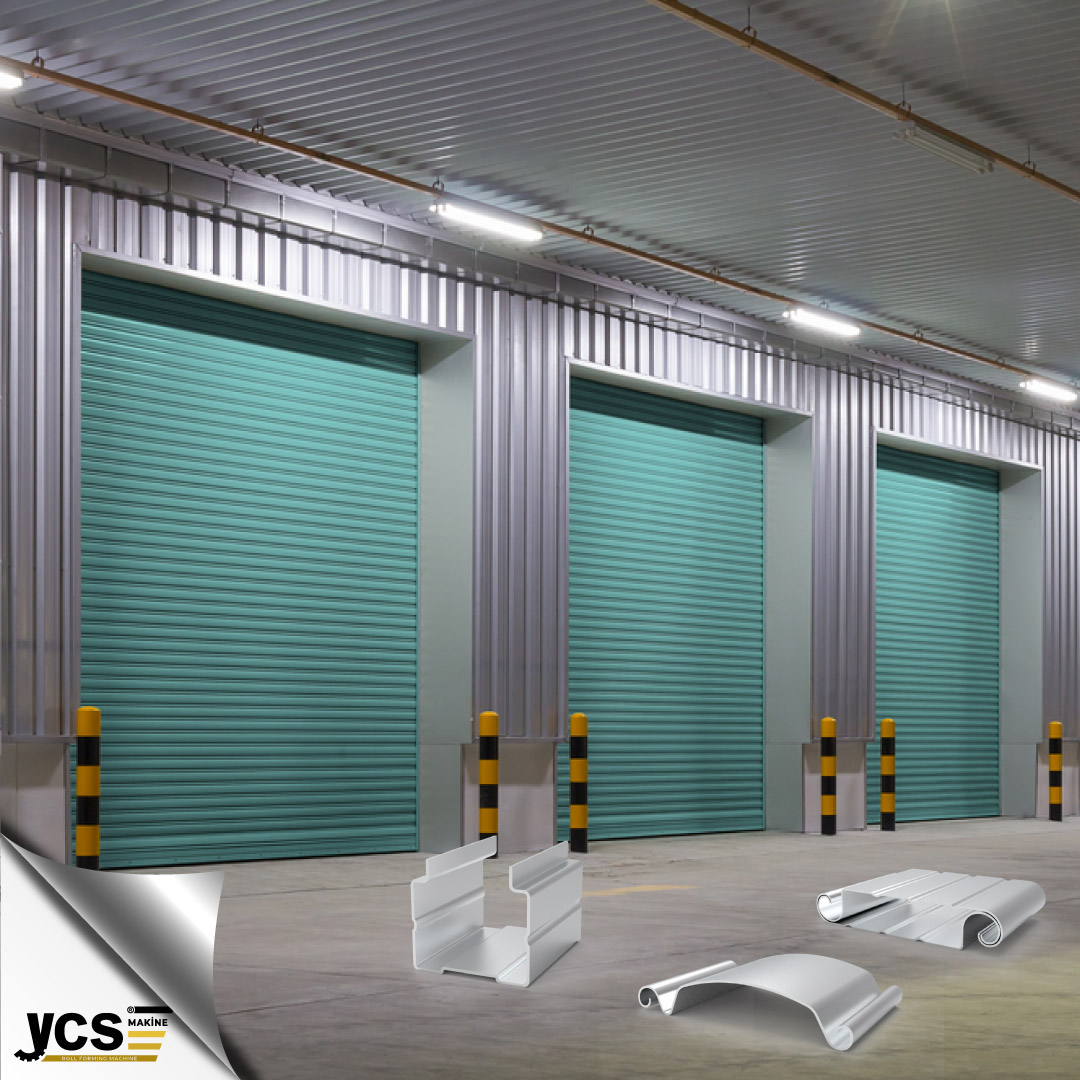
Roller Shutter Doors
Roller Shutter Doors: Profiles, Materials and Production
Roller shutter doors use interlocking slats that travel in side guides and coil around a barrel above the opening. They are used in shops, warehouses, industrial buildings, garages and security closures because the curtain stores compactly and can be operated manually or by a motor. The performance of the finished door depends on the complete system: slat geometry, material, guides, bottom bar, barrel, end locks, drive and installation.
Main components of a roller shutter system
- Slats: Interlocking profiles that form the moving curtain.
- Side guides or channels: Control curtain movement and resist lateral loads.
- Bottom slat or bottom bar: Stiffens the lower edge and can carry seals or locking elements.
- Barrel and brackets: Support the rolled curtain above the opening.
- Drive system: Manual spring, chain or motorized operation according to door size and duty.
- End locks and fasteners: Help retain and align slats inside the guides.
- Hood and seals: Protect components and limit dust, light or air leakage where specified.
Common roller shutter slat materials
Material selection must reflect opening size, wind demand, security level, appearance, corrosion environment and operating frequency.
Galvanized and pre-painted steel
Steel slats provide strength and can be supplied with protective metallic or paint coatings. The grade, coating mass, paint system and thickness should be specified because they affect forming behavior, corrosion resistance and finished-door performance.
Aluminum
Aluminum can reduce curtain weight and offers corrosion advantages in suitable applications. Alloy, temper, wall geometry and surface treatment affect stiffness, roll-forming setup and appearance.
Stainless steel and special materials
Stainless steel may be selected for demanding environments or architectural finishes. Its work-hardening and surface sensitivity require correct tooling, lubrication and material handling. Material changes should always be evaluated against the same profile drawing and performance requirement.
Flat, curved, insulated and perforated slats
Slat shape influences coil diameter, strength, appearance and interlocking action. Single-skin curved or flat slats are common for compact shutters. Double-wall or insulated profiles can improve stiffness and thermal or acoustic behavior, but the complete door must be tested and specified as a system. Perforated or micro-perforated slats allow visibility or ventilation; the hole pattern and open area must suit the application.
How roller shutter profiles are manufactured
- Coil preparation: The correct slit coil is loaded onto the decoiler and aligned with the line.
- Feeding and guiding: Entry guides center the strip so the first forming stand receives it consistently.
- Punching or perforation: Holes, slots or micro perforation are made before or during forming when required.
- Progressive roll forming: A sequence of roll stands gradually bends the strip into the approved slat geometry.
- Cutting: The profile is cut to programmed length using a process compatible with the section.
- Inspection and handling: Operators check dimensions, interlock fit, surface quality and length before packing or assembly.
A well-engineered roller shutter machine coordinates these operations without damaging the coated surface or distorting the interlock.
Key equipment in a roller shutter production line
A typical line includes a decoiler, entry guide, optional straightener or feeding system, forming mill, cut-off unit and run-out support. Depending on the product, it can also integrate punching, foam filling, marking, counting or stacking. The correct configuration depends on material, profile, speed and the range of finished lengths.
YCS also supplies related equipment for a complete product family, including shutter side channel machines, bottom slat roll formers and micro punching machines.
Quality checks for roller shutter slats
- Profile width, height and critical interlock dimensions
- Straightness, camber, bow and twist over an agreed sample length
- Cut length and squareness
- Surface scratches, roll marks, paint damage and zinc pickup
- Consistent engagement between adjacent slats
- Hole or perforation location and pattern
- Fit with the guide channel, end lock and bottom profile
Incoming strip width, thickness, grade and coating should also be recorded. When material properties change, springback and profile dimensions can change even if machine settings remain the same.
Choosing a roller shutter machine
Begin with the finished slat drawings and material range. Define whether the line will produce one profile or several, and how often changeovers will occur. Then specify target output, punching, cut-off, automation and factory acceptance criteria. Avoid comparing suppliers only by stand count or theoretical speed; the decisive question is whether the complete line can produce your approved profile consistently.
For a structured specification, read how to choose a roll forming machine. For investment planning, use the roll forming machine price guide.
Information required for a project proposal
- Slat, guide and bottom-profile drawings
- Material grade, coating, thickness range and strip width
- Coil dimensions and maximum coil weight
- Finished lengths, annual volume and target production rate
- Perforation, punching, foam or marking requirements
- Required changeover method and automation level
- Destination voltage, factory standard and installation scope
Frequently asked questions
Can one line make several shutter profiles?
It may be possible when profiles share compatible geometry and material ranges. The solution can use adjustable tooling, change parts, cassettes or separate tooling sets. YCS reviews all drawings before confirming the changeover concept.
Can steel and aluminum run on the same machine?
Possibly, but the tooling, lubrication, drive and settings must suit both materials. Differences in strength, springback and surface sensitivity must be evaluated during engineering and testing.
What information controls machine speed?
Profile geometry, material, hole pattern, cut method, finished length and handling all influence actual output. The complete production cycle should be used when defining speed.
Build a complete shutter profile line
YCS Machinery engineers roller shutter profile lines around the customer’s drawings and production requirements. Send your profiles and material specifications to receive a line configuration and factory-acceptance proposal.
Please contact with us if you want to get more information...
Related technical guides


